Loading...

Alligator vs. Crocodile: Differences and How to Tell Them Apart

Alligator vs. Crocodile: Differences and How to Tell Them Apart

Alligators and crocodiles are among the most powerful reptiles on Earth and are often confused due to their similar appearance. For wildlife enthusiasts exploring Africa on Tanzania safari tours, understanding the difference between these two ancient predators adds depth and safety awareness to the safari experience. Belonging to the order Crocodylia—alongside caimans and gharials—alligators and crocodiles share an evolutionary history that dates back to the age of dinosaurs, making them living relics of prehistoric Earth

Ancient Origins and Evolutionary Split

The ancestors of modern crocodilians, known as crocodylomorphs, first appeared over 230 million years ago. Remarkably resilient, they survived multiple mass extinction events, including the one that wiped out the dinosaurs 66 million years ago. Around 80–100 million years ago, evolutionary pressures and geographic separation caused a major split. Crocodiles evolved specialized salt-excreting glands, allowing them to thrive in both saltwater and freshwater environments an adaptation still observed today in large river systems visited during Serengeti safari packages. Alligators, lacking this adaptation, became limited to freshwater habitats.

Shared Traits Between Alligators and Crocodiles

Despite their differences, these reptiles share several formidable characteristics that make them apex predators:

  • Exceptional swimmers – Their muscular tails and streamlined bodies allow swift movement through water, especially visible in rivers of Serengeti National Park.
  • Surprising speed on land – Both can sprint up to 17–18 km/h over short distances.
  • Impressive breath control – They can remain submerged for over an hour while stalking prey.
  • Qatar Airways
  • Stealth advantage – Eyes and nostrils positioned atop the head enable them to see and breathe while nearly invisible underwater.
  • Superior night vision – A high number of rod cells enhances low-light hunting efficiency.

These airlines provide both direct and connecting flights to destinations across Europe, Africa, and the Middle East.

Main Differences Between Alligators and Crocodiles

    Snout Shape
  • Alligator: Broad, rounded U-shaped snout
  • Crocodile: Narrow, pointed V-shaped snout
  • This difference affects diet, bite mechanics, and prey selection.

    Jaw and Teeth Visibility
  • Alligator: Teeth hidden when the mouth is closed
  • Crocodile: The fourth lower tooth remains visible, creating a distinctive toothy grin
  • Skin Color
  • Alligator: Dark gray to black, ideal for murky freshwater swamps
  • Crocodile: Olive to tan, blending with brackish and open waters
  • Size
  • Alligator: Typically up to 15 feet (4.5 m)
  • Crocodile: Saltwater crocodiles can exceed 20 feet (6 m), making them the largest living reptiles
  • Temperament
  • Crocodiles: Highly territorial and more aggressive
  • Alligators: Generally shy but defensive when threatened
  • Habitat Range
  • Alligators: Freshwater only
  • Crocodiles: Freshwater and saltwater across Africa, Asia, Australia, and the Americas—important knowledge when planning Tanzania safari costs and activities near water.

Hunting Behavior and Bite Strength

Both animals are ambush predators, but their bite mechanics differ:

  • Alligator
    With a bite force of approximately 2,125 PSI, alligators excel at crushing hard-shelled prey such as turtles.
  • Crocodile
    Saltwater crocodiles possess the strongest bite of any living animal, reaching up to 3,700 PSI, ideal for gripping and tearing large mammals during river crossings.

Crocodile vs. Alligator: Who Would Win?

In a hypothetical encounter, a crocodile would likely dominate due to its larger size, higher aggression, and superior bite force. In reality, such confrontations are rare because their natural habitats rarely overlap.

Danger to Humans

  • Crocodiles account for significantly more human fatalities each year, particularly Nile and saltwater crocodiles encountered near rivers during Tanzania safari tours.
  • Alligators are less aggressive but remain dangerous if provoked, especially near nests or feeding areas.

Crocodiles in Tanzania: The Nile Crocodile

Tanzania is home to the formidable Nile crocodile (Crocodylus niloticus), one of Africa’s most feared predators. These massive reptiles inhabit lakes, rivers, and wetlands, including Serengeti National Park, where they play a vital ecological role. Often seen basking along riverbanks during Serengeti safari packages, Nile crocodiles prey on fish, birds, antelope, and occasionally other crocodiles cementing their status as apex predators. Understanding the difference between alligators and crocodiles enhances wildlife appreciation and safety awareness. For travelers exploring Tanzania’s waterways, knowing you are observing crocodiles not alligators adds context to one of Africa’s most thrilling safari encounters.

Related Packages

Tanzania National Park Entrance Fees 2025

Tanzania has a wide variety of national parks, each with its own entrance fees and additional costs for activities. Below is a general guide to the park fees for Tanzanian national parks, though these fees can change and vary depending on the park, time of year, and type of activity. It is always recommended to check directly with the Tanzania National Parks Authority (TANAPA) for the most up-to-date information.
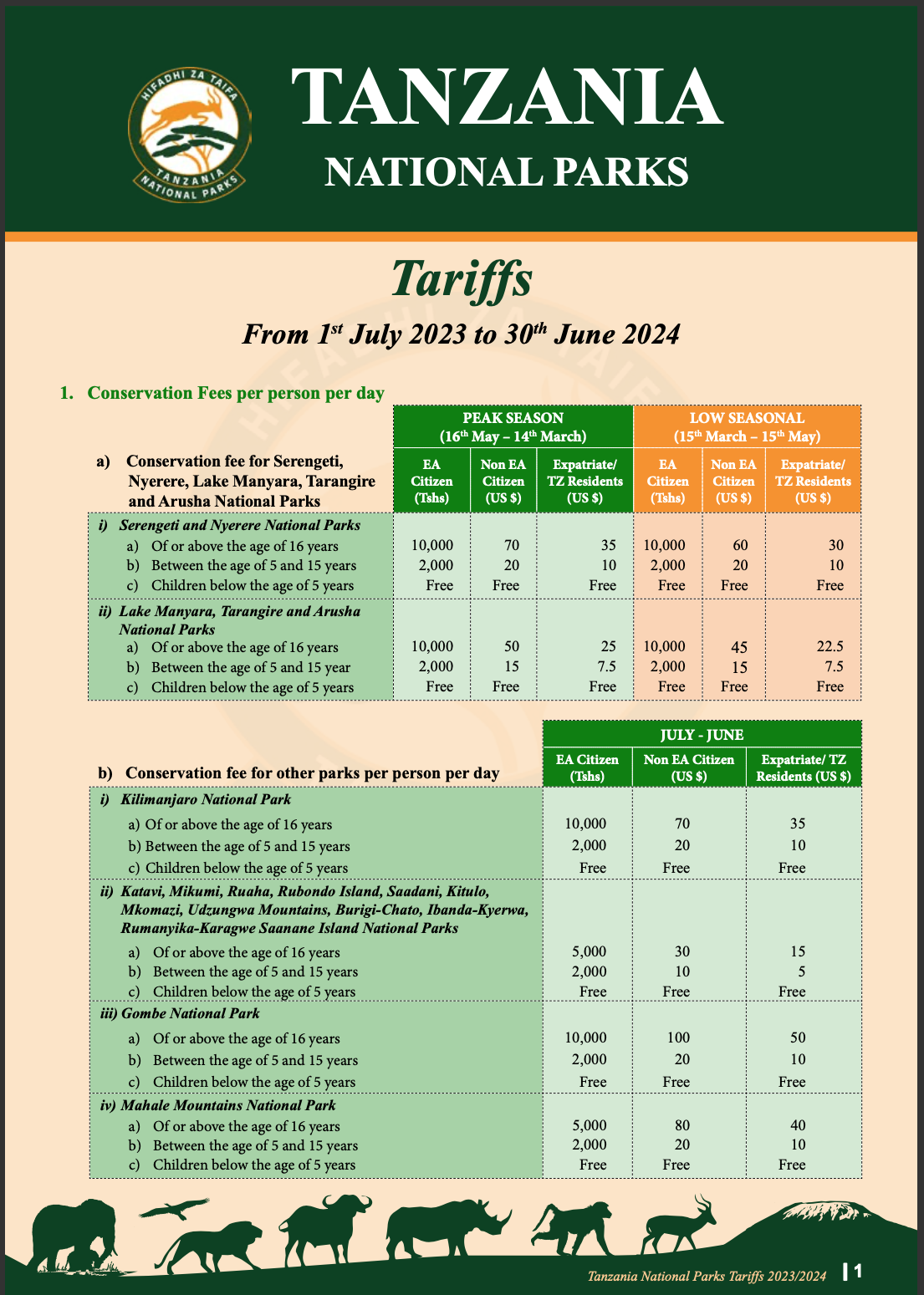
tanapa logo
Tanzania National Park Entrance Fees

It is always recommended to check directly with Tanzania National Parks(TANAPA)

Download Pdf

Reviews of Nasikia Safaris

We love hearing from our guests! Your feedback helps us grow and provide the best experiences possible. If you’ve enjoyed your Tanzania safari, Climbing Kilimanjaro, or Zanzibar Vacation with us, please take a moment to share your thoughts on SafariBookings, Google, and TripAdvisor. Whether it’s a memorable moment, a standout service, or simply a beautiful view, your words inspire future travelers.